Morocco Travel Guide · First-Time Visitors
Practical Tips for Your First Trip to Morocco
Everything you need to know before visiting Morocco — from the best time to travel and what to wear to money, transport, culture and local experiences.
A first trip to Morocco can feel like several journeys in one: ancient medinas, Atlantic towns, High Atlas valleys, Sahara dunes, colorful souks and a food culture that is part of the experience itself. A little preparation helps you enjoy all of it with more confidence.
At Morocco Fantastic Tours, our local team has guided travelers across Morocco for years. This guide brings together the practical questions first-time visitors ask most often, with advice designed to help you plan a smoother and more authentic journey.
Morocco at a Glance
Morocco · North Africa
Moroccan Dirham (MAD)
Arabic & Amazigh · French widely used
Up to 90 days, depending on entry requirements
When is the best time to visit Morocco?
Morocco is a year-round destination, but the best time depends on the route you want to follow.
Spring (March to May) and autumn (September to November) are excellent for city trips, road journeys and many desert itineraries thanks to generally comfortable temperatures.
For the High Atlas, the warmer months are popular for trekking. Routes around Toubkal and M’Goun change significantly with altitude and season, so mountain equipment should always match current conditions.
If the Sahara is a priority, avoid planning long outdoor desert activities during the hottest part of summer whenever possible.
Best approach: choose your dates based on the landscapes and activities you care about most.
What should you wear in Morocco?
Morocco is welcoming to visitors, but local culture is generally more conservative than in many Western destinations. Comfortable, modest clothing is a practical choice.
Women: lightweight trousers, longer skirts or dresses, loose tops and layers that cover the shoulders work well in most places.
Men: lightweight trousers or longer shorts and breathable shirts are practical for city and rural travel.
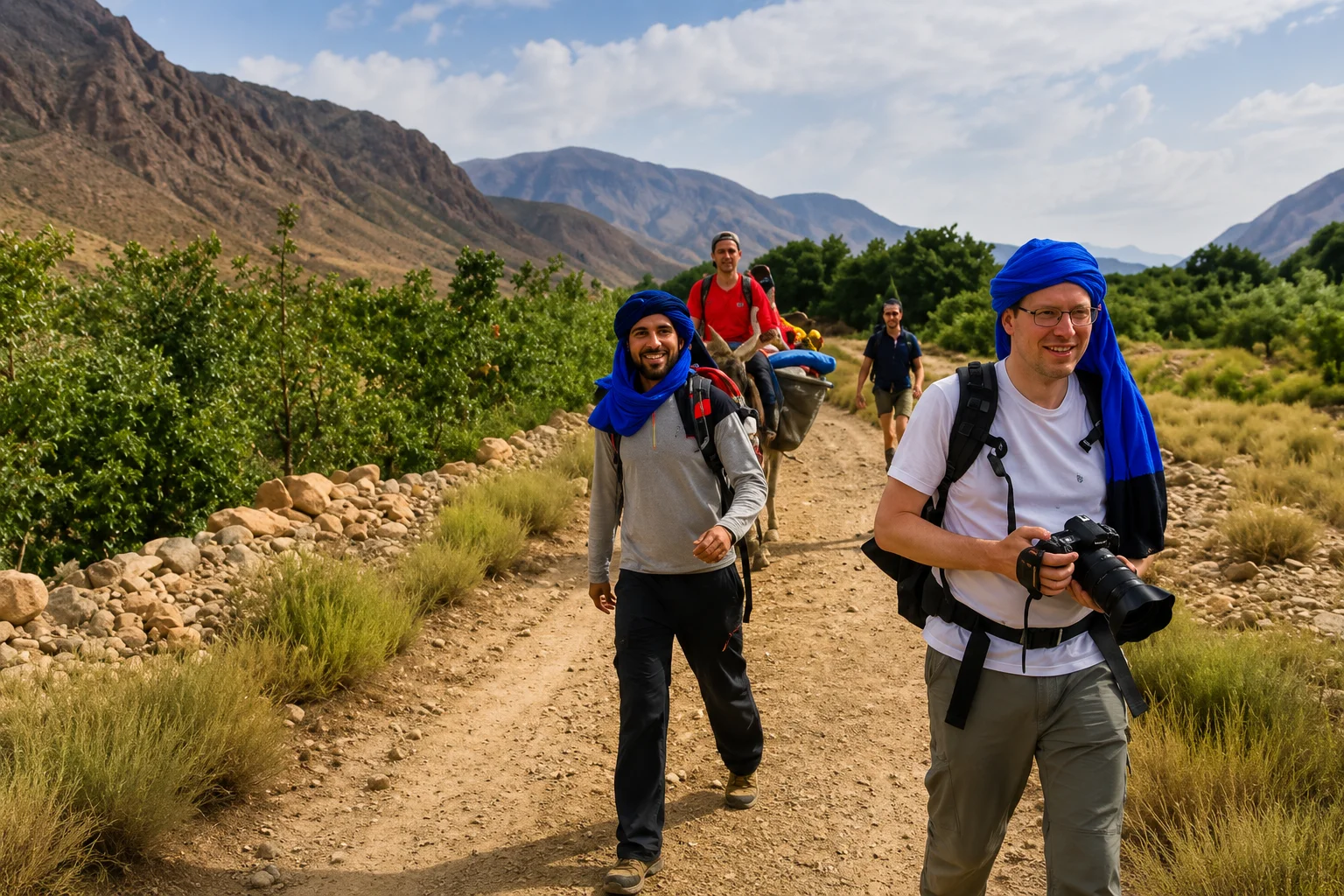
For the Atlas Mountains or Sahara, prioritize weather protection, good footwear and layers rather than fashion.
A scarf is one of the most useful items you can pack: sun, wind, dust and cooler evenings.
Is Morocco safe for travelers?
Morocco is generally considered a safe destination for international visitors, but normal travel precautions still matter.
Keep valuables discreet in busy areas, use reliable transportation, pay attention in crowded souks and avoid isolated streets late at night when you do not know the area.
A private itinerary with verified drivers and local guides can make logistics easier, especially on your first visit or when traveling between remote regions.
Use the same awareness you would use in any unfamiliar international destination.
Do you need a visa to enter Morocco?
Entry requirements depend on your nationality, so they should always be checked before departure.
Morocco allows tourist stays of up to 90 days, but whether you need a visa, e-visa or electronic travel authorization depends on your passport.
Travel with a valid passport and verify the latest requirements through the official Moroccan authorities or the Moroccan embassy or consulate responsible for your country.
Do not rely on an old blog post for visa rules — confirm the requirements for your nationality before flying.
How to get around Morocco
How you move around Morocco depends on the type of trip. Trains are useful between major cities, while private transfers are often the easiest option for desert, mountain and multi-stop itineraries.
Rail connections serve destinations such as Casablanca, Rabat, Tangier, Fez and Marrakech. Buses and domestic flights can also be useful depending on the route.
For tailor-made itineraries, a private driver gives you more flexibility for stops, smaller villages and landscapes outside the major transport corridors.
For a first trip with several regions, route planning matters as much as choosing the destinations.
Money in Morocco: currency, cash and cards
The official currency is the Moroccan Dirham (MAD).
Cards are accepted in many hotels, restaurants and larger businesses, but cash remains useful in souks, small shops, taxis and rural areas.
ATMs are widely available in cities, and official exchange offices can be found in airports and tourist areas. Check your bank’s international fees before traveling.
Keep a mix of payment options and some smaller Dirham notes for everyday purchases.
Internet, Wi-Fi and SIM cards
Mobile coverage is strong in Morocco’s main cities and tourist areas. Wi-Fi is common in hotels and riads.
If you want mobile data throughout the trip, a local SIM or eSIM can be convenient. Coverage can become more limited in remote mountain and desert areas.
Download key maps, bookings and contact information before traveling into regions where connectivity may be less reliable.
A power bank is especially useful on road trips, trekking days and desert routes.
Moroccan food you should try
Food is one of the best ways to experience Morocco. Regional recipes vary, so leave room to try more than the dishes you already know.
Try: tagine, couscous, pastilla, Moroccan salads, mint tea, dates and local breads.
Small family-run restaurants and meals prepared during trekking or village visits can become some of the most memorable parts of the journey.
Ask your guide what is seasonal or typical in the region you are visiting.
Respect local culture and customs
Small gestures of respect go a long way in Morocco.
Ask before photographing people, dress appropriately in traditional or rural areas and be sensitive to local routines during Ramadan.
Access to mosques varies: many are not open to non-Muslim visitors, so always follow local signage and guidance rather than assuming entry is permitted.
Learning a few words such as Salam Alaykum and Shukran is always appreciated.
Curiosity is welcome; respectful curiosity is even better.
Is it worth booking a private Morocco tour?
For travelers who want to combine several regions, a private itinerary can save time and simplify the logistics of transport, guides and accommodations.
It also makes it easier to adapt the pace of the trip, stop in smaller places and include experiences that are difficult to organize independently.
At Morocco Fantastic Tours, we design private and tailor-made journeys around your dates, interests, travel style and the regions you want to discover.
The best itinerary is not the one with the most stops — it is the one that gives you time to experience them.
Frequently Asked Questions About a First Trip to Morocco
How many days are enough for a first trip to Morocco?+
Seven to ten days can work well for a first itinerary, while 10 to 14 days gives you more time to combine cities, the Atlas Mountains and the Sahara without rushing.
What is the best month to visit Morocco?+
There is no single best month for every itinerary. Spring and autumn are popular for many routes, while mountain and desert conditions vary by season.
Can I use euros or US dollars in Morocco?+
The official currency is the Moroccan Dirham. Foreign currency can be exchanged, but everyday purchases are normally made in Dirhams.
Do I need a guide in Morocco?+
A guide is not required for every trip, but local guides can add context, simplify logistics and be particularly useful in medinas, mountain regions and tailor-made multi-day routes.
Is Morocco a good destination for a first visit to North Africa?+
Morocco offers a broad mix of cities, mountains, desert, coast, food and cultural experiences, making it a popular choice for travelers exploring North Africa for the first time.
Ready to plan your first Morocco adventure?
Tell us your dates, interests and the places you dream of seeing. Our local team can design a private journey around the Morocco you want to experience.